
Design Rules
When I start an arrangement, it really depends on what I’m designing for. If it’s a designer’s choice piece, I naturally lean toward something more modern, asymmetrical, and slightly whimsical. I usually start with a flower I’m drawn to that day and build everything around it. If it’s a client order, I always start by reading their notes carefully. That usually guides everything. If they ask for whimsical, I’ll reach for softer, more playful elements. If they want something modern, I’ll focus more on structure and shape. If it’s romantic, I immediately think of roses and build from there. Every arrangement starts with a direction — even if it’s a loose one.
Balance, Movement, and Space
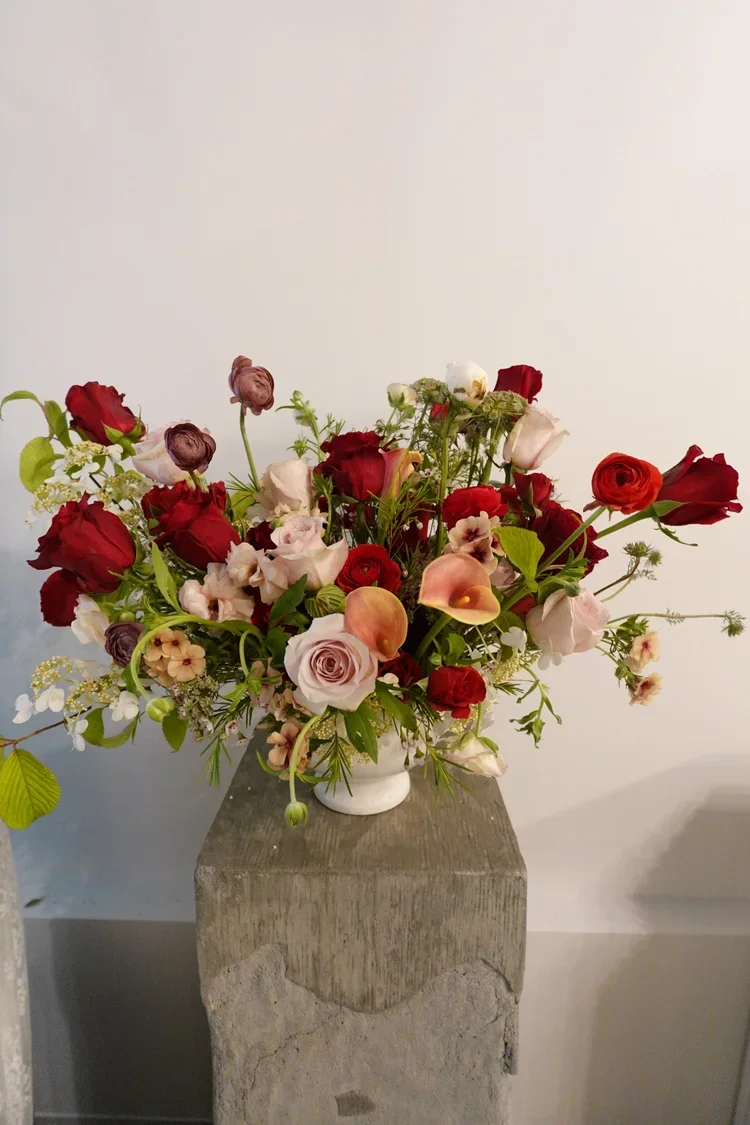
I don’t design symmetrically, but I am always thinking about balance. One side might have more movement or height, while the other side feels heavier or more grounded. It’s not about making both sides match — it’s about making the whole piece feel complete. One rule I always follow is that no flower should ever be the same height or length as another. Everything needs to feel staggered and dimensional. That’s what creates interest and depth. Movement is also a huge part of how I design. Something I always teach my team and talk about in workshops is how the eye travels through an arrangement. When someone looks at it, are they just staring at one focal flower — or are they moving from one detail to the next? To me, a good arrangement feels like waves. Your eye keeps moving, discovering new textures, shapes, and details. There’s a rhythm to it. I can’t fully explain the feeling, but I know when I look at something with movement, I feel it. Negative space plays a big role too. Especially in our more modern designs, negative space is what creates architecture. It gives the arrangement room to breathe. It creates pauses. It’s similar to architecture in a building — sometimes the most interesting part is what’s not there. That space makes you stop and look again.
Knowing When It’s Finished
Knowing when an arrangement is finished is probably the hardest part. There are moments where you’re just working with greens and texture and you think, this looks amazing, I’m done. And then you realize… no one is going to pay for that. So you keep going. Eventually, there’s a point where it just feels complete. It’s not something I can measure — it’s more of a feeling. You step back and think, okay, this is it. There are also a few common mistakes I see beginners make. The biggest one is thinking floral design is easy. Beyond that — cutting stems too short, making everything the same height with no dimension, placing flowers straight up instead of at an angle, and not properly cleaning stems or removing leaves. Those small things make a big difference.
Color, Restraint, and Experience
When it comes to focal flowers, it usually depends on the client or the price point. If a client specifically asks for something like peonies, that becomes the focal point and is usually placed last. If it’s a designer’s choice, I typically save the most delicate or expensive bloom — or a tropical — for the end. Color also plays a huge role in how an arrangement feels. Colors naturally carry emotion. Citrus tones like orange, peach, yellow, and lime feel bright and joyful. Deep burgundy, dark pinks, and greens feel more moody and dramatic. Soft pinks and reds feel romantic. But one thing I don’t believe in is assigning strict meanings to colors — like white meaning death or yellow meaning friendship. That’s not how I design. To me, color is about feeling, not definition.
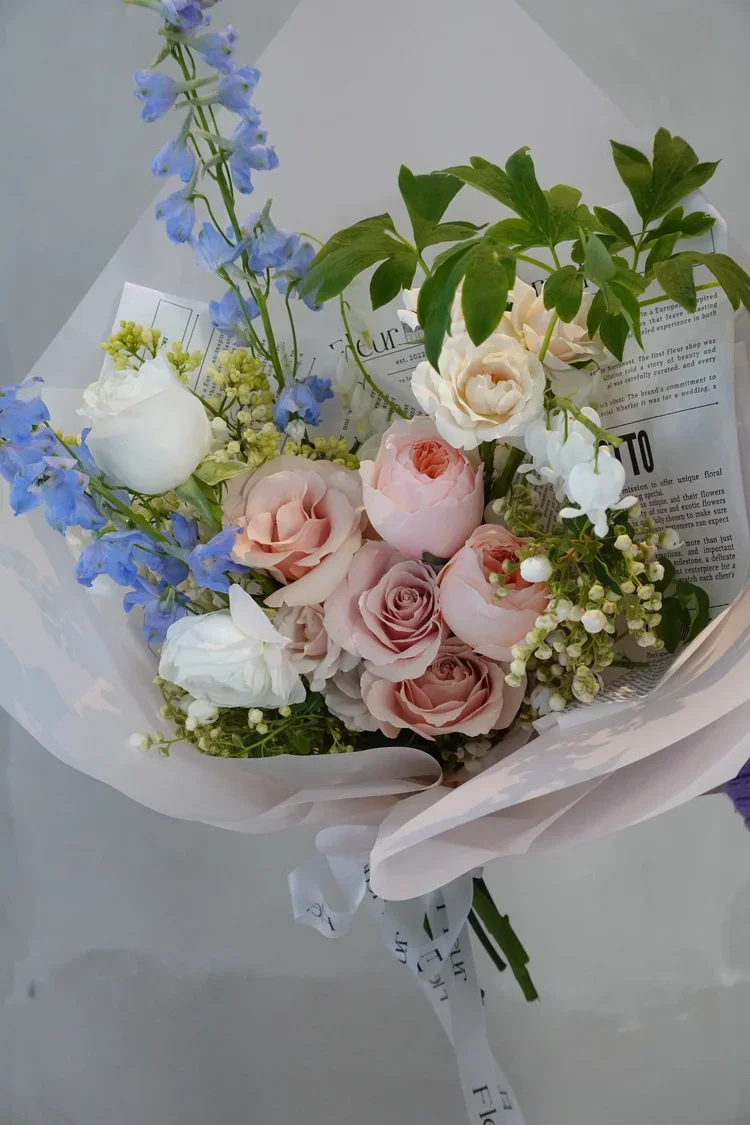
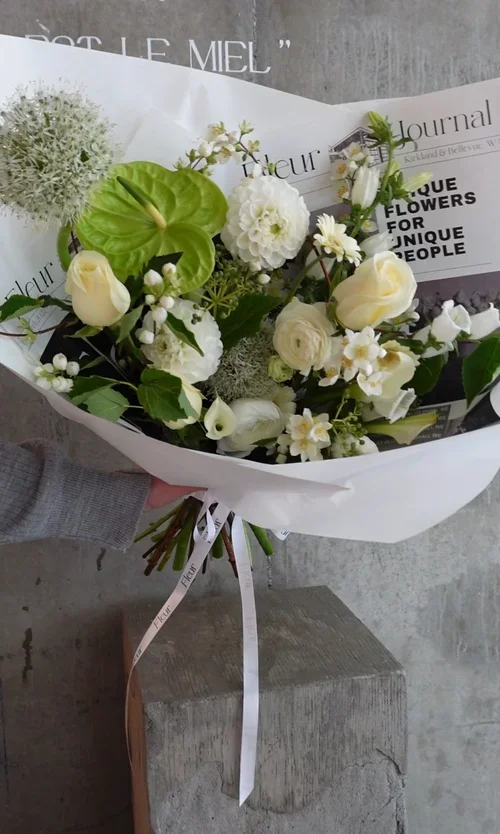
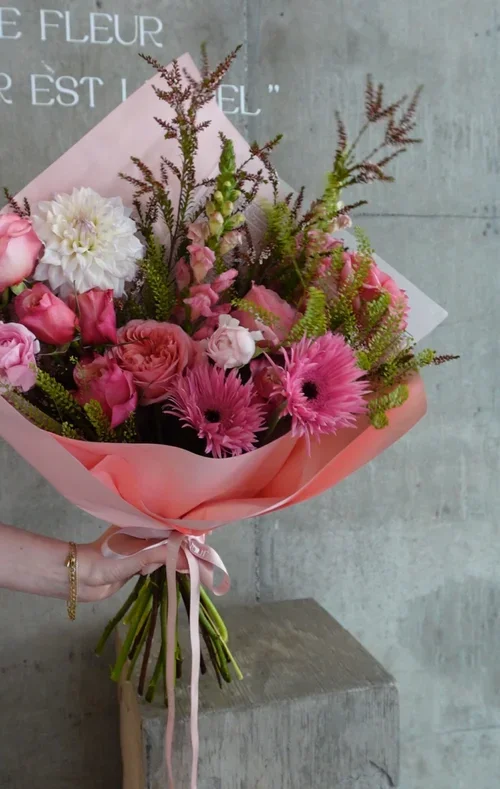
Restraint is another important principle, and it’s one that takes time to learn. At first, it’s easy to want to keep adding more — more flowers, more fullness. But over time, you realize that sometimes less really is more. The challenge is balancing that with what customers often ask for, which is something more lush. It’s a constant balance.
And then there are the quiet principles — the ones people don’t always notice, but that guide everything. I think what guides my work the most are things like restraint, structure, and intention. I’m always thinking about how something feels as a whole. I don’t like to overfill arrangements or mix too many colors. I want each flower to have a purpose, and I want the design to feel balanced, even if it’s not symmetrical. A lot of it comes down to movement and shape — making sure the piece feels natural, but still structured.
And beyond the flowers, I think about the full experience — how it’s wrapped, how it’s presented, how it’s received. All of those details matter just as much as the design itself. There are also small things behind the scenes that matter just as much — like how we care for the flowers. I don’t like forcing blooms open just for appearance. I’d rather a flower open naturally and last longer for the customer. And sometimes that also means removing a bloom altogether if I know it won’t hold up. Even if it looks beautiful in the moment, if it won’t last, it doesn’t belong. Things like proper processing, clean water, and flower food might seem small, but they’re part of the experience. It’s about respecting the flower — and making sure what we create continues to open and evolve even after it leaves the shop.
XoXo,
Your Fleurist,
Angelina
