
Finding a Signature Style
In the first year of Fleur, I was really trying to understand two things at the same time: our customers and the flowers themselves. Not every flower works well for retail. Some blooms are absolutely stunning, but they require so much care or they fade so quickly that they simply aren’t practical for everyday bouquets. So in the beginning, a big part of my learning process was figuring out which flowers lasted well and which ones customers loved receiving. Even seasonal and local flowers can be tricky; just because they’re beautiful doesn’t mean they’ll hold up well in a bouquet.
Experimenting with Arrangements and Inspiration
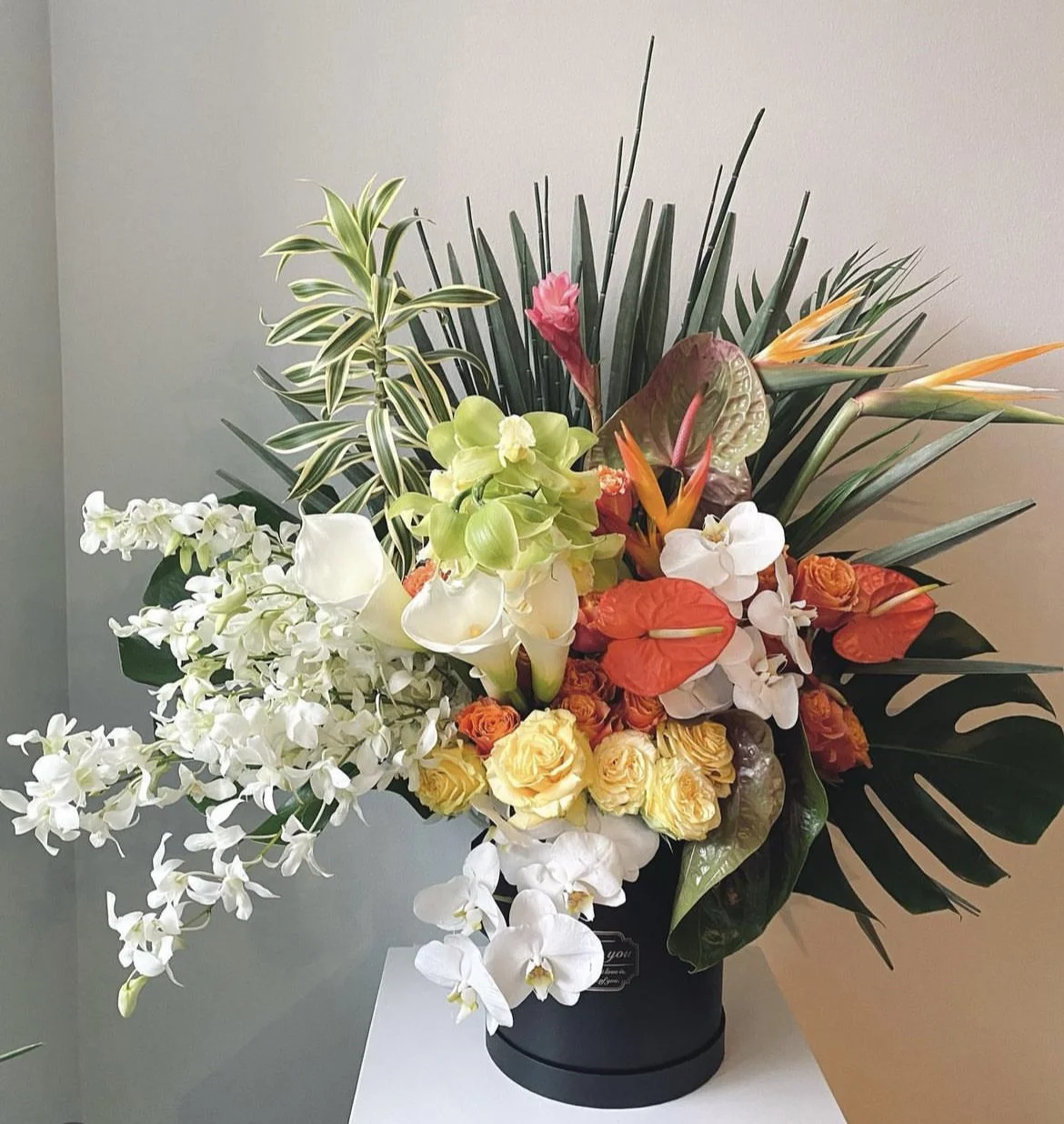
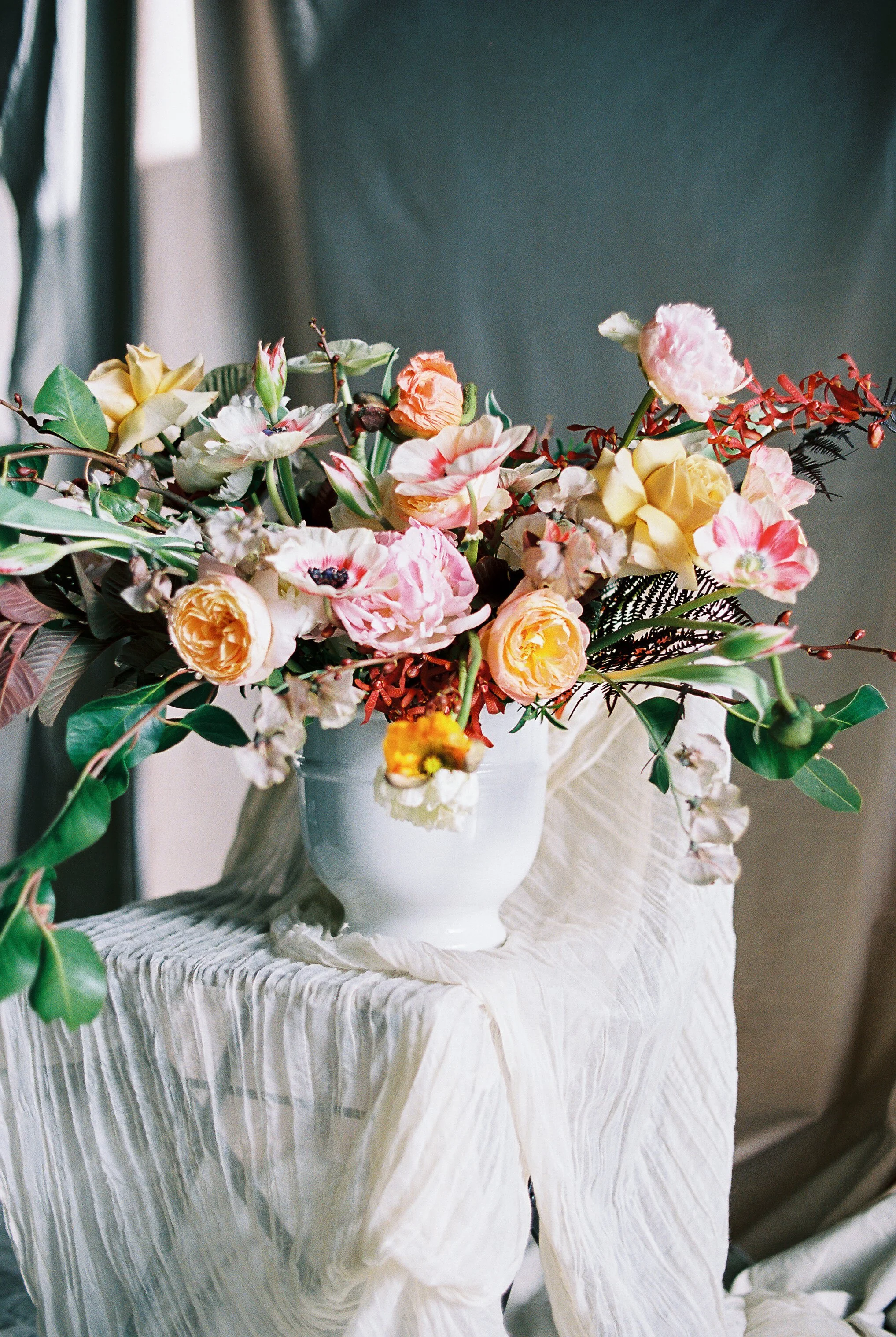
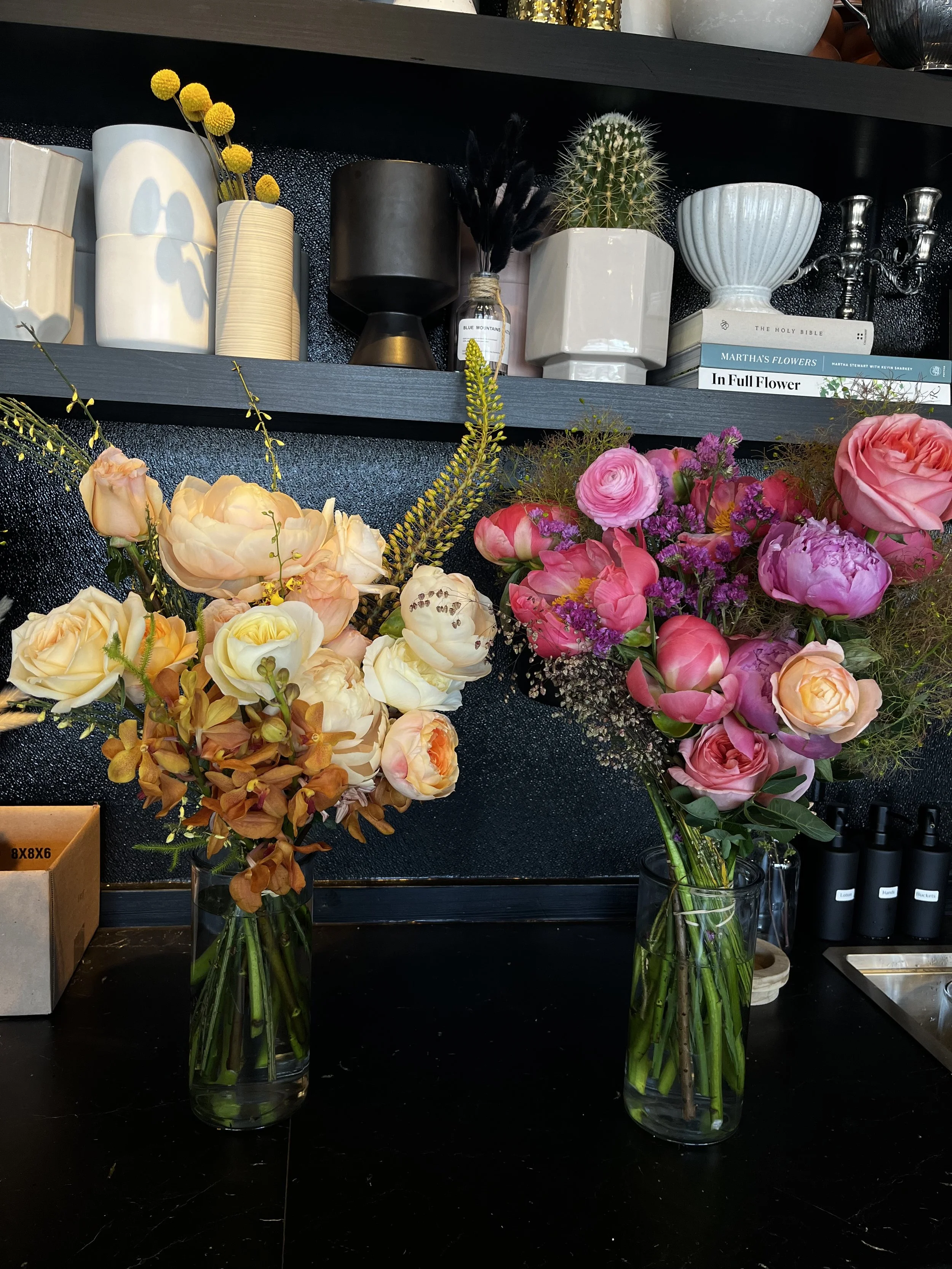
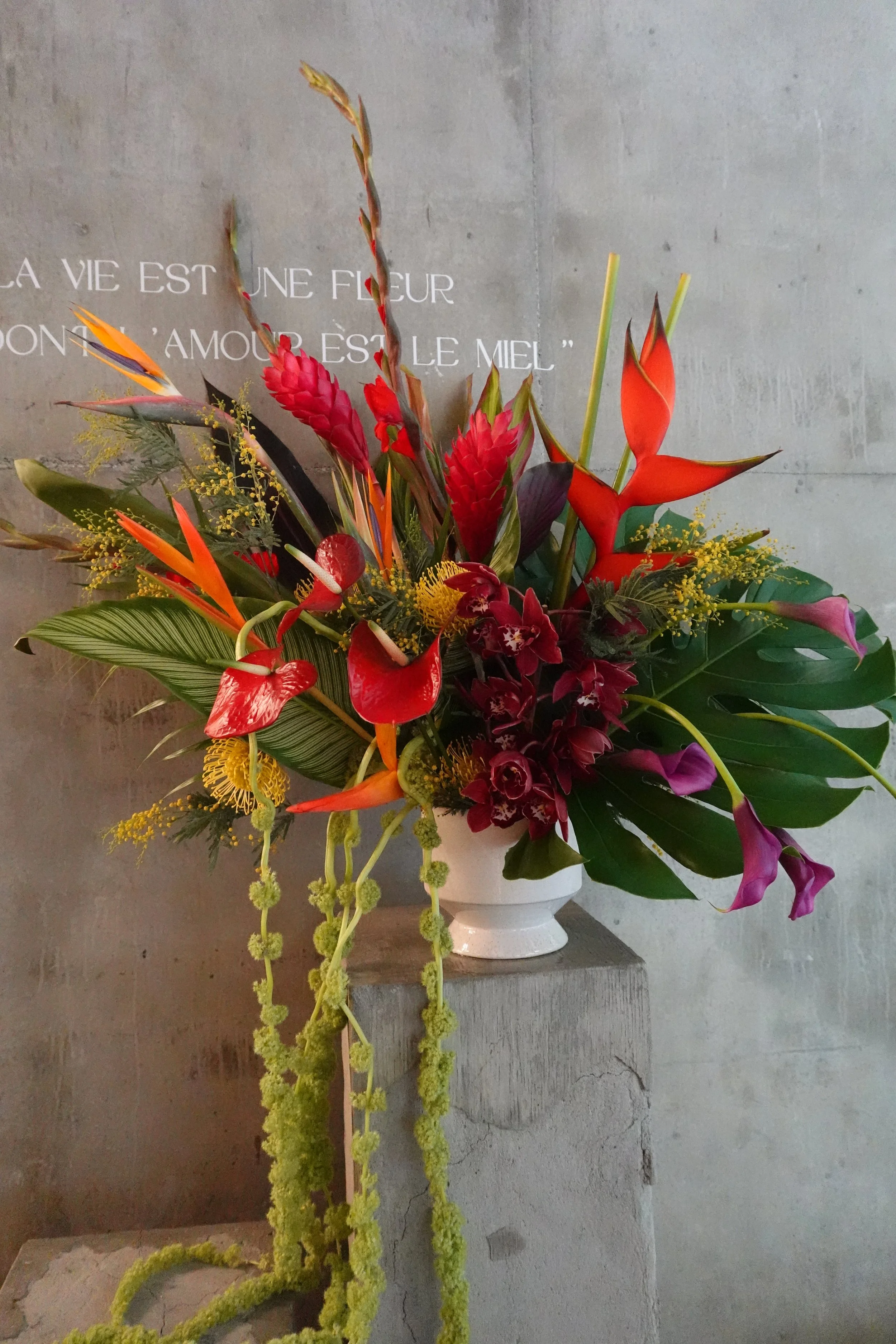
During that time I was creating all types of arrangements while figuring things out. Most of them leaned whimsical or tropical, which makes sense because tropical flowers are really what started my whole floral journey. I wouldn’t say I experimented with dozens of styles. It was more like two or three directions that I was exploring. But luckily for me, I learned fairly quickly what flowers and color palettes customers responded to. Over time I started noticing a pattern: Fleur customers really love monochromatic arrangements. Once I saw that clearly, I leaned into it more intentionally.
Recognition and Signature Packaging
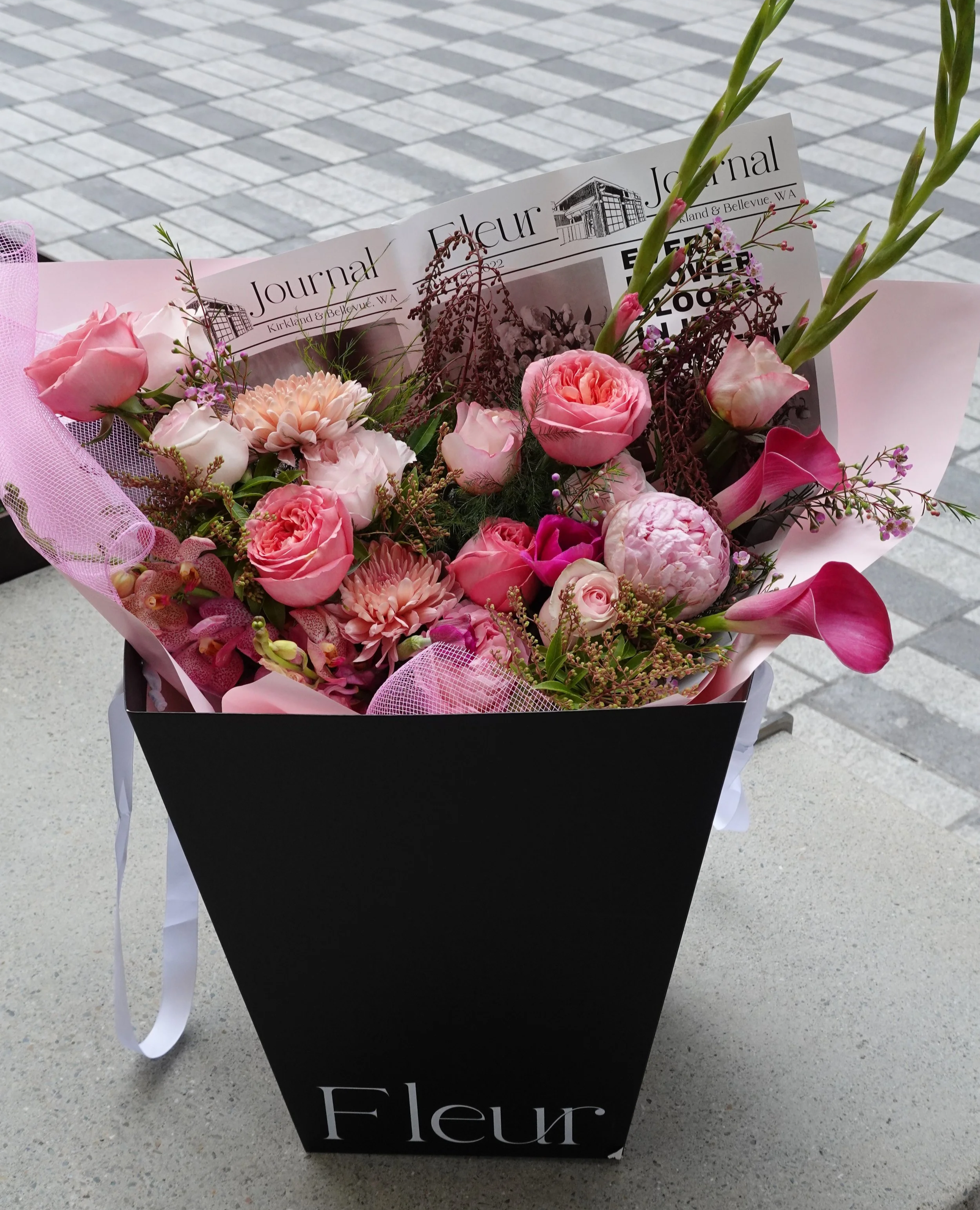
In terms of inspiration, I was very specific about the aesthetic I wanted Fleur to have from the beginning. Most of my inspiration came from florists and floral shops in Russia, Europe, and Korea. Their work felt completely different from what I was seeing locally.
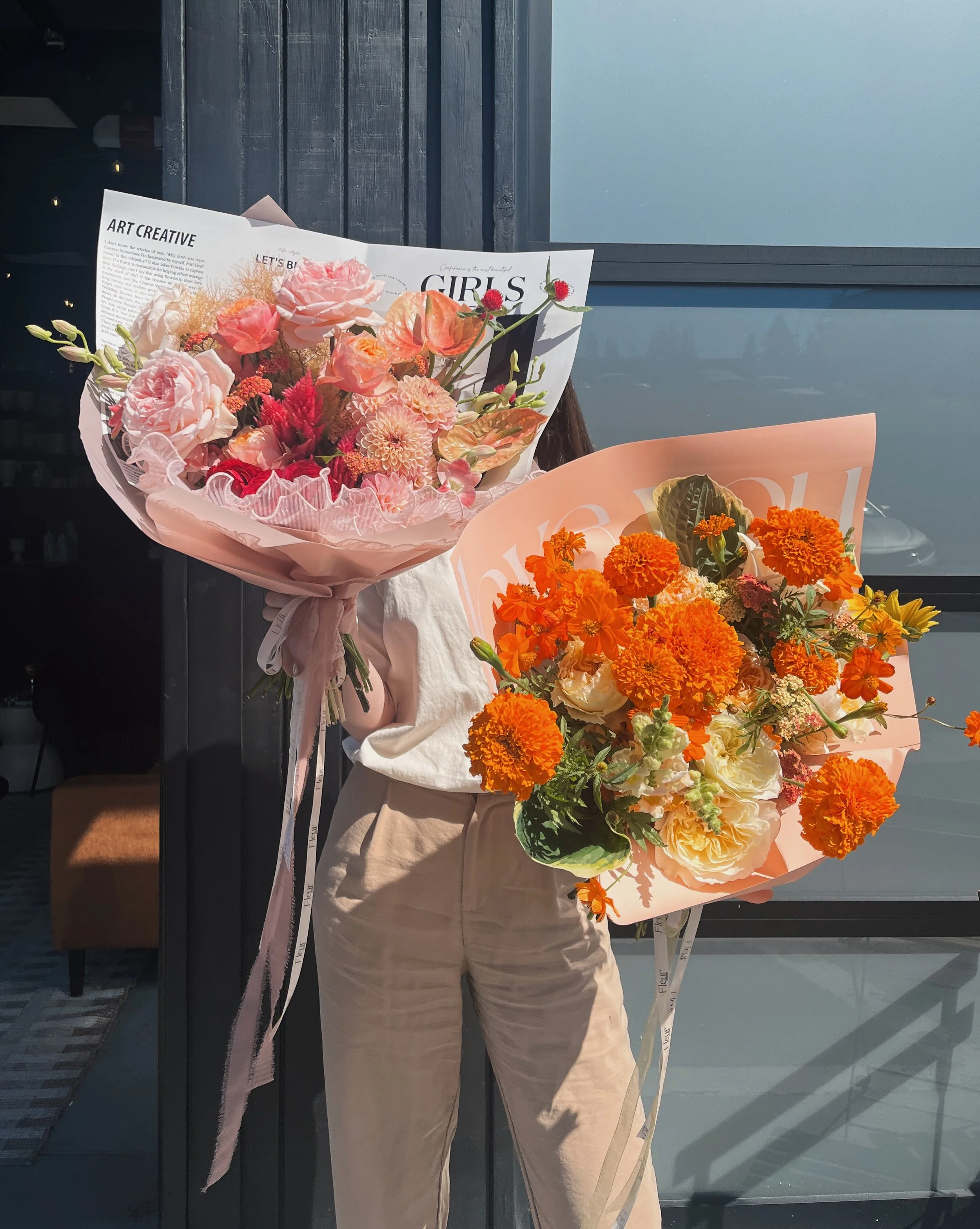
The wrapping alone took me the longest to perfect — the waterproof Korean paper and the European-style aquabox and bag system. It took a lot of trial and error, but eventually I figured it out. I had never really seen that kind of presentation in Seattle before, and I knew I wanted to bring that feeling here.
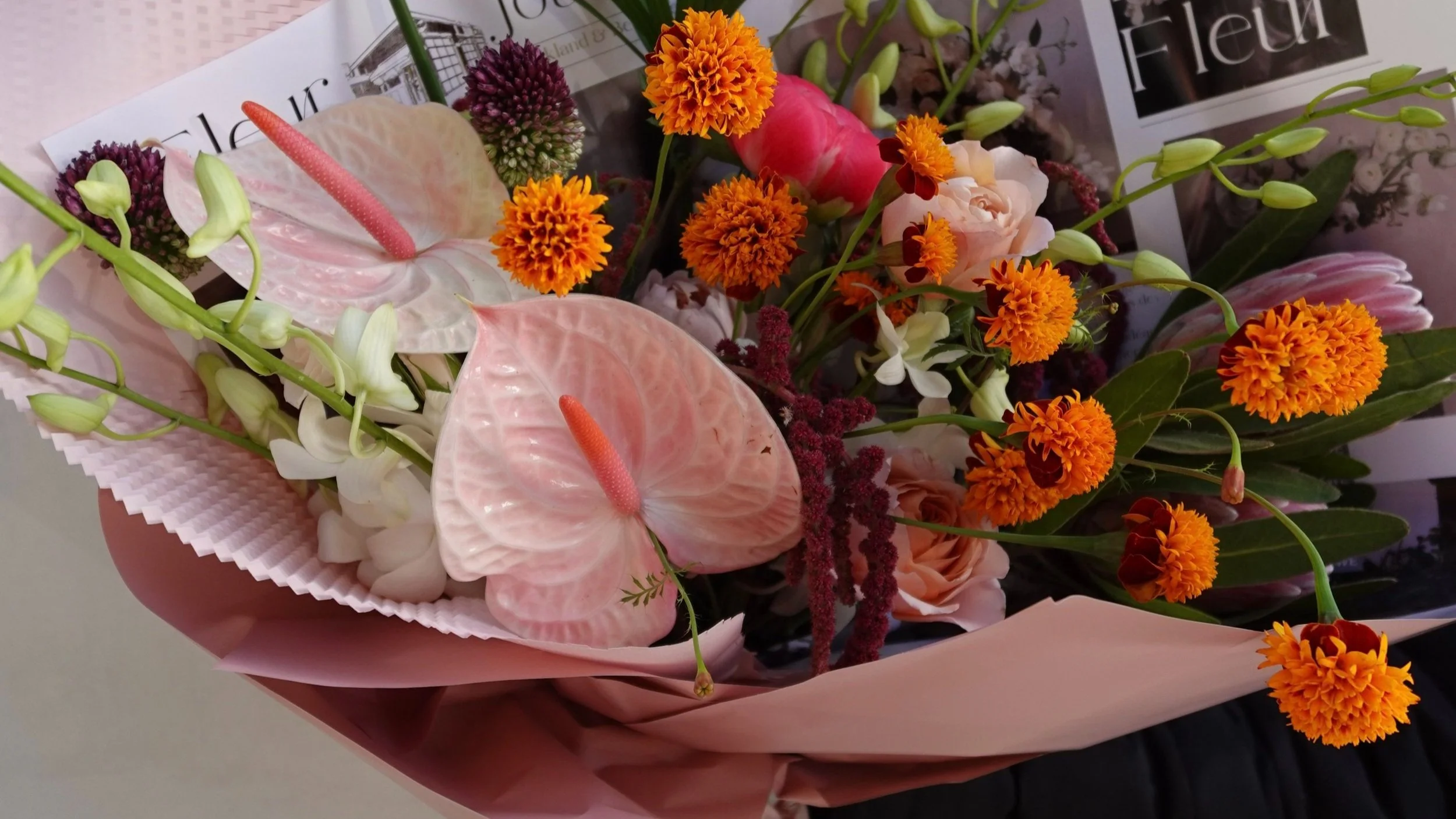
Somewhere along the way, customers started recognizing Fleur arrangements. Even before the shop officially opened, when I was doing pop-ups, people would tell me they recognized our bouquets. Hearing that was incredibly encouraging. Today it’s even easier for people to recognize Fleur because of our signature packaging — the newspaper wrap and the Fleur bags that customers have really come to love.
Developing a Modern Style
Technically speaking, I learned as a traditional florist. But pretty quickly I realized that style didn’t excite me very much. I found myself wanting to create things that felt more modern, more expressive. So I started watching videos from Korean and European florists and studying how they approached mechanics, structure, and movement in their work. Later on, when newer florists started writing books about design principles, I realized many of those ideas were things I had already been teaching myself by observing other artists and experimenting on my own. Seeing those philosophies written down was helpful, but in many ways I had already discovered them through practice.
At the time I was opening Fleur, there weren’t many florists openly sharing the techniques I was interested in. I followed styles and retail concepts more than individual florists. That said, I always admired wedding designers like Kaleb Norman James and Sinclair & Moore here in Seattle. Now there are many more florists whose work I love to watch — designers like Elle, Sweet Pea, Phosphorus, Kylie Hale, and Emerald Bloom. It’s been really exciting to see more florists embracing movement, seasonal blooms, and more expressive design styles.
Tropical Blooms and Design Principles
As for the flowers themselves, tropical blooms will always have a special place in my heart. They’re what started this entire journey for me. I still find myself drawn to them whenever I design. My instinct is always, “This needs a tropical.” Unfortunately, I learned fairly quickly that not everyone shares that same obsession. So I started exploring many other flowers as well. Now almost any bloom can inspire me. I look at the movement of the stem, the way the flower opens, the colors, the details — and those things guide how the design develops.
When it comes to design elements, there are a few principles I always return to: structure, movement, color theory, and texture. Those are things I think about constantly, and they’re principles I teach my team as well. Working with tropical flowers early on definitely influenced my style. Tropical blooms naturally have strong architecture and shape, and studying them for so long trained my eye to follow structure and form. Most of my designs end up asymmetrical, architectural, and slightly modern. If I try to create something purely romantic or whimsical, I sometimes have to really think about it — otherwise it naturally leans modern again.
Teaching and Evolving the Fleur Style
One of the most meaningful moments for me wasn’t a specific arrangement, but a realization. At Fleur we have an internship program, and I don’t hire florists unless they’ve completed it. Over time, I started noticing that my interns — who are now our florists — were creating arrangements that clearly felt like Fleur. That’s when it clicked for me that this style could actually be taught. It takes time, concentration, attention to detail, and a lot of practice, but eventually the Fleur style becomes second nature. What I love now is that even though every arrangement reflects the Fleur aesthetic, each florist still brings their own subtle signature to it. When I look at a bouquet, a bag arrangement, or even a small bud vase, I can usually tell which team member created it.
Over the years my style has also evolved to feel more luxurious. I’ve learned to order specific greens and fillers that support the look of the brand. I’ve learned to simplify color palettes so arrangements feel more refined. Small decisions like that slowly shaped the brand into something more elevated. Today Fleur designs are defined by a few core things: strong structure, intentional color palettes, and carefully selected blooms. And of course, the finishing touch our customers love the most — the packaging. The Fleur bags and signature newspaper wrap have become just as recognizable as the flowers themselves. Together, all of those details are what make a Fleur arrangement feel like Fleur.
XoXo,
Your Fleurist,
Angelina
