The Flowers I Always Come Back To
There are certain flowers I always find myself reaching for. Not necessarily the most expensive ones. Not even always the “prettiest” ones. But the ones with personality.
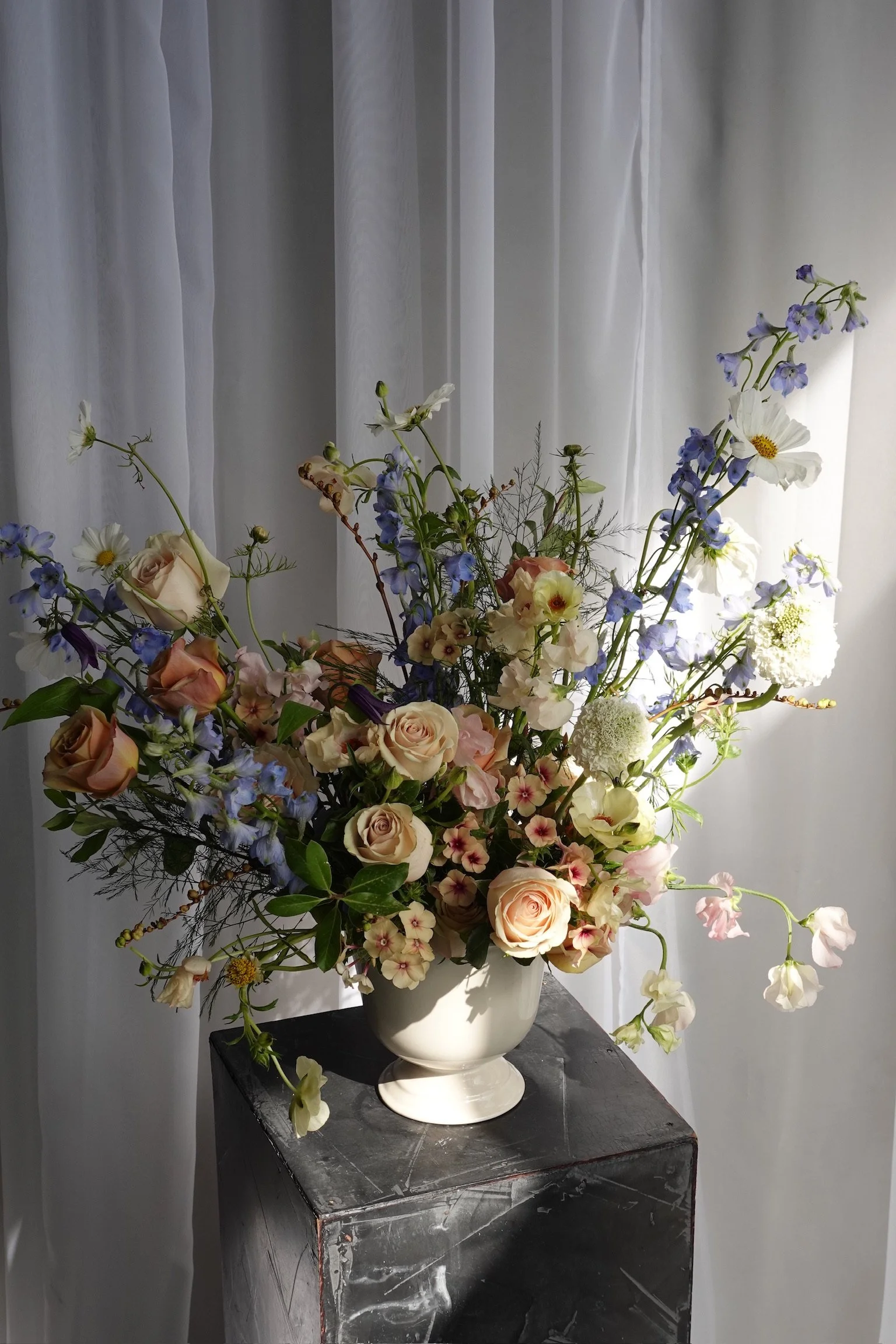
I’m always drawn to something a little unusual — a stem with a bend, a curve, something slightly off. Sometimes a rose, a ranunculus, or even a gerbera will come in twisted or moving in a way that feels different, and I immediately want to design something around it. Those are the flowers that pull me in.
For wraps, I love working with lush greenery — viburnum snowball, spirea, raspberry. There’s something about the way those stems move and fill space that makes me want to create something special. They almost design themselves if you let them.
I think the reason I’m drawn to these types of flowers is because they have personality. They’re not perfect. They’re not predictable. They bring something unexpected into the design. And sometimes, honestly, they’re just easier to work with — they give you structure without forcing it.
When I think about what represents Fleur the most, it’s anything modern, architectural, or a little bit “funky.” Our motto is unique flowers for unique people, so whenever a unique stem shows up, it just fits. It feels like us.
The Flowers I Used to Overlook
What’s funny is some of the flowers I love now are the ones I didn’t appreciate before. Carnations. Alstroemeria. Gerberas. Even roses. They’re all seen as “basic” — and I used to think that too.
But carnations never die. I swear. And if you take out the center, they can look like a mini lisianthus for a fraction of the cost. When you cluster carnations or alstro together in a vase, they actually look so dynamic and full.
Gerberas are another one. The ones people usually see are the standard grocery store versions — but there are so many variations. Pasta gerberas, spider gerberas, micro gerberas, peach tones with deep centers. They’re so intricate when you really look at them.
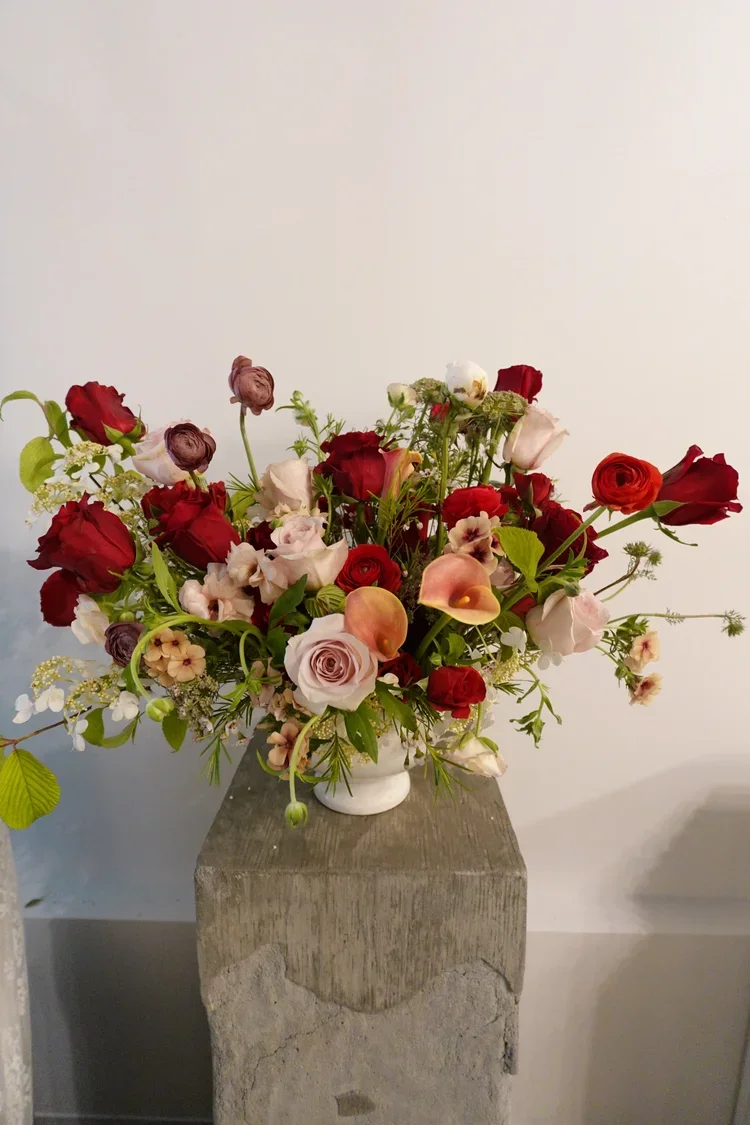
And roses — I used to not love them. But once I discovered how many varieties exist, and how differently they open, I completely changed my mind. There are hundreds of types, and each one behaves differently. Now they’re a staple in almost everything we do.
The Feeling Behind the Flowers
Of course, there are also flowers that instantly elevate a design. Anything with a larger head or a higher price point — ranunculus, peonies, anthuriums, tropicals. They naturally draw the eye and make a piece feel more luxe.
But some of my personal favorites — the ones I always come back to — are clematis, anemone, butterfly ranunculus, and spirea. I didn’t work with these before Fleur, but once I found them, I couldn’t stop. They just felt right.
Seasonality also plays a huge role in what I gravitate toward. Being in Seattle, the seasons really affect what’s available and how designs come together. Fall and winter can be more challenging if you’re trying to create something lush and full, but over time we’ve learned how to work with what’s in season.
It really comes down to the recipe. If your recipe is strong, the arrangement will work. If it’s not, you’ll feel it immediately.
Each season has its own feeling. Fall — blush dahlias, burgundy tones, deeper textures. Winter — pine, amaryllis, anemones. Spring — soft pastels, yellows, pinks, lavenders. Summer — bright, joyful, playful colors. The flowers tell you what the season is supposed to feel like.
Some flowers are tied to memory, too. Lilac has always felt nostalgic to me — it reminds me of my childhood. Lilies remind me of a phase of my life where they were my absolute favorite flower. And tropicals will always remind me of my mom and growing up with her. That’s really where all of this started.
Learning What Belongs Together
When it comes to deciding what flowers belong together, it wasn’t something I just knew right away. It was a lot of trial and error.
At first, you think floral design is easy — until you start building something and realize it’s not coming together the way you imagined. Over time, I developed a recipe that works. Something I now teach to my interns and florists. It helps with structure, budgeting, and creating something that feels elevated and consistent.
If I had to choose a few flowers that represent Fleur, it would be: Anthurium — always a statement, always part of our identity. Garden roses — we use them in almost everything, which isn’t very common. Ranunculus — soft, layered, and a customer favorite. Anemone — we almost always have it. And something seasonal — like dahlias or peonies — depending on the time of year.
Those are the ones that feel like Fleur.
But honestly, it’s not just about the flowers. It’s about how they’re chosen, how they’re placed, and how they come together to create something that feels intentional. That’s what I always come back to.
XoXo,
Your Fleurist,
Angelina