One of my favorite topics to talk about is pricing. Not because I love talking about money, but because I love educating people about flowers.
I can't tell you how many emails we've received over the years with a beautiful inspiration photo full of peonies, orchids, tropical flowers, and every luxury bloom you can imagine, followed by, "My budget is $100." It honestly makes me smile every time. Not because I'm making fun of it, but because before Fleur, I probably would've thought the exact same thing. I had no idea how much flowers actually cost until I started buying them every single week.
Flowers Aren't Inexpensive
I think one of the biggest misconceptions about floristry is that flowers are inexpensive. They're not. Unless you're driving to a flower farm in Bellingham, cutting them yourself, arranging them yourself, and pretending your time, gas, and supplies don't count, you're probably going to spend about the same amount you would've paid a florist anyway. Sorry.
I can't really tell you why people underestimate the cost of flowers. I just know that most people do. When Fleur first opened, I'd say 99% of customers were surprised by pricing. Now, after years of educating our customers through our website, social media, workshops, and conversations in the shop, I'd say it's closer to fifty-fifty. Half of our customers understand why flowers cost what they do, and the other half are still learning. And that's okay. You can't expect someone to understand something they've never been taught.
I also think part of it is cultural. I'm European, and in many European countries flowers are part of everyday life. You bring flowers to dinner parties, birthdays, celebrations, holidays, almost everything. Because flowers are gifted so often, people generally know what they cost. In other cultures, flowers aren't given as frequently, so there's naturally more curiosity. Why is it wrapped this way? Why does one bouquet cost more than another? Why is this flower so expensive? They're fair questions.
It's really no different than food. Some people think a $45 steak is expensive. Someone else happily spends $500 on a tasting menu. Neither person is wrong. They simply value different experiences. Floristry works the same way, and the biggest difference is education. Once you understand what goes into a bouquet, you begin to look at it differently.
A Lot of Hands Touch One Bouquet
When someone buys flowers, they're not just paying for stems. They're paying for everything that happened before those flowers ever reached the design table: the farm that grew them, the exporter, international shipping, the wholesaler, the employee who unloaded them, and the florist who removed every leaf, recut every stem, hydrated every flower, checked every bloom for quality, and threw away the ones that weren't good enough. Then someone designed it, wrapped it, photographed it, packed it safely for delivery, and maybe even delivered it to your front door.
That's a lot of hands touching one bouquet, and that's before we even talk about running a flower shop. Rent, utilities, insurance, payroll, packaging, ribbon, paper, water, buckets, flower food. Every bouquet helps support all of those things.
One thing customers often overlook is the labor behind floral design. People sometimes think they're paying someone to tie flowers together, but they're also paying for years of experience: knowing which flowers naturally work together, understanding color theory, knowing how different greens affect the overall feeling of a bouquet, understanding which flowers drink more water than others, and knowing which blooms should be removed because they won't last at the customer's home, even though we already paid for them.
That's something we do often at Fleur. If I know a bloom isn't going to perform well for the customer, I'd rather throw it away than hope they don't notice. It costs us money, but protecting the customer's experience is worth more than the stem.
Flowers Are Alive
Flowers are also unlike almost any other product because they're alive. People often assume flowers are like groceries, that you can simply buy whatever you want whenever you want. But flowers don't work that way. They're completely dependent on the season, the weather, the farm they're grown on, and sometimes what country they're coming from.
There are weeks when my wholesaler calls and says, "Sorry, that variety didn't arrive." Or, "The quality wasn't good enough." Or my personal favorite: "It came in purple instead of pink." Those are always the fun phone calls. Other weeks, a flower that normally costs me three dollars a stem suddenly costs eight because Valentine's Day is around the corner or there was a crop shortage somewhere in the world. That's one of the reasons Fleur has always been Designer's Choice. I'd rather work with what's beautiful and in season than force a recipe that isn't at its best.
Why Luxury Flowers Look Different
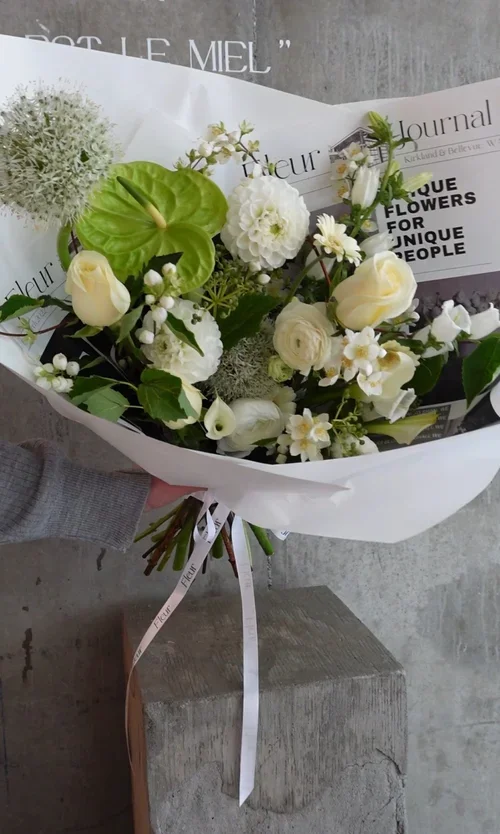
I also get asked why luxury flower shops look different from grocery stores. The answer isn't just prettier wrapping. The flowers themselves are different: different varieties, different farms, different growing conditions, different quality. A specialty garden rose doesn't behave the same way as a standard rose. A locally grown flower doesn't always look like one shipped halfway around the world. Even the recipes are different.
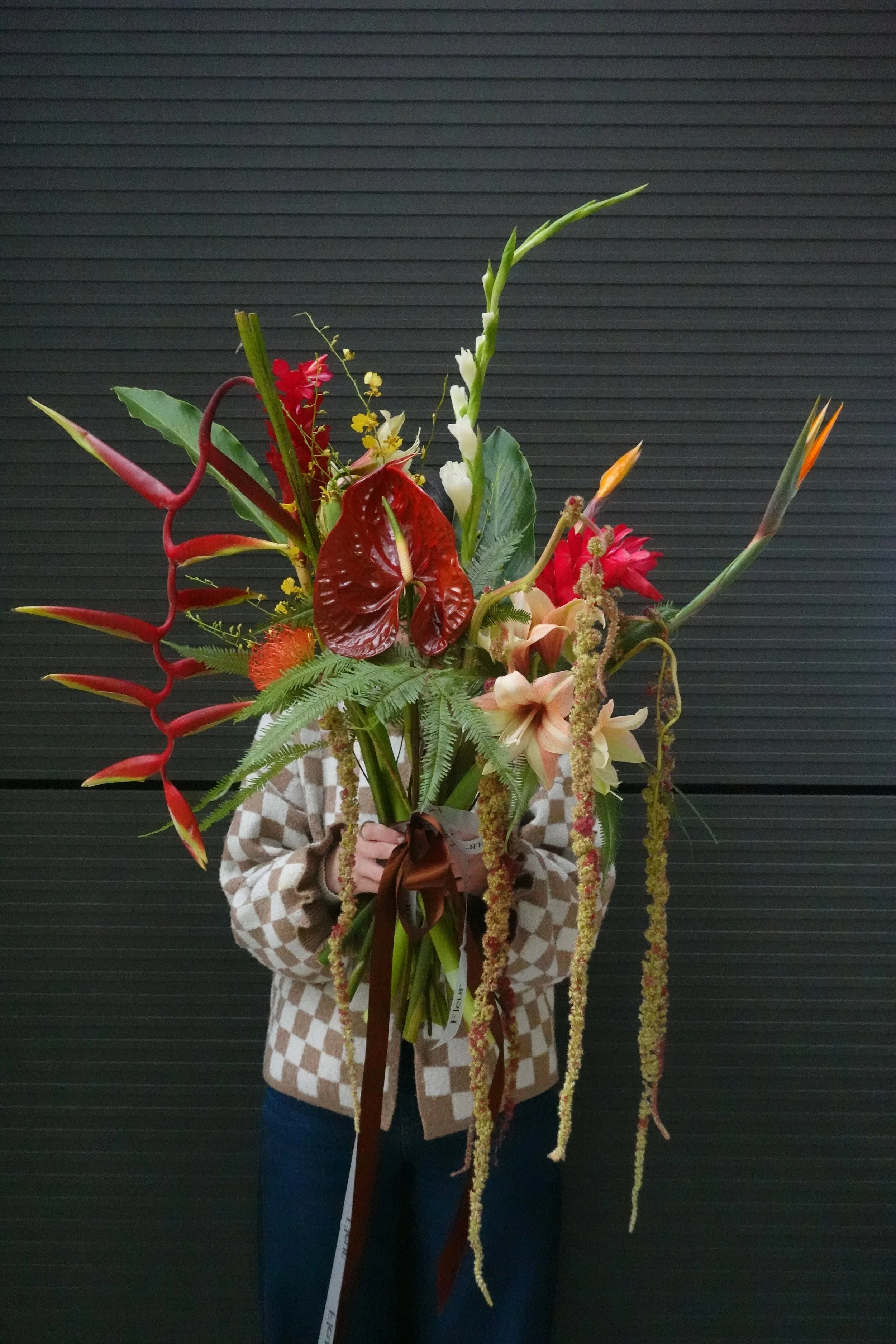
One thing I teach every florist at Fleur is how to design strategically. If we're using premium flowers like peonies or anthuriums, we intentionally balance them with complementary flowers, fillers, and greens that allow us to stay within budget without sacrificing the overall look. Believe it or not, floral design is a little bit of math, which is funny, because I actually hate math. But after enough years, it becomes second nature. You begin to understand which flowers elevate a bouquet and which flowers quietly support it. It's like cooking: the ingredients matter just as much as the recipe, and every season, that recipe changes.
Something else people don't always realize is that sometimes the bouquet they're asking us to make costs us more than they're paying for it. A $50 bouquet made on the spot might easily contain $100 worth of flowers if we're not careful. The same goes for collaborations. Flowers aren't free just because they're for social media. They're still flowers, they're still inventory, and they're still someone's work.
We Educate
So how do we communicate all of this without making people feel bad? We educate. I don't think it's my job to convince someone that Fleur is worth it. I think it's my job to explain why we do what we do: why flowers are seasonal, why one variety costs more than another, why we choose Designer's Choice, and why we remove blooms that won't last. The more people understand flowers, the more they begin to appreciate them.
That doesn't mean everyone will agree with our approach, and that's okay. Some people simply want the lowest price possible. Others value craftsmanship, longevity, thoughtful design, and the overall experience. Neither person is wrong. They're just looking for different things. My goal has never been to convince everyone that Fleur is for them. My goal is to create something with integrity, educate people along the way, and let them decide if it resonates with them. And if it does, I know they'll appreciate not just the flowers, but everything that went into creating them.
I think that's also what I'd want people to understand about supporting any small creative business. Most of us aren't charging more because we're trying to become millionaires. We're charging what it takes to continue creating, paying our teams fairly, investing in quality, and keeping our doors open. We work incredibly hard to create something beautiful while keeping our prices as fair as we possibly can. And if someone leaves our shop understanding flowers just a little bit more than they did before they walked in, I feel like we've done our job.
XoXo,
Your Fleurist,
Angelina